You are no longer buying tools. You are hiring software.
In 2018, three partners at Bain published a piece in Harvard Business Review called “The B2B Elements of Value.” They did the unglamorous work most of us avoided. They took the soft, unmeasured reasons businesses buy from each other and made them concrete. Forty elements, stacked in a pyramid (Figure 1). At the base, the things you can write into a contract: meeting specifications, an acceptable price, regulatory compliance. Above that, functional value, cost reduction and scalability. Higher up, the elements nobody likes to admit move a purchase order: expertise, responsiveness, reduced anxiety, risk reduction. At the top, vision and hope.
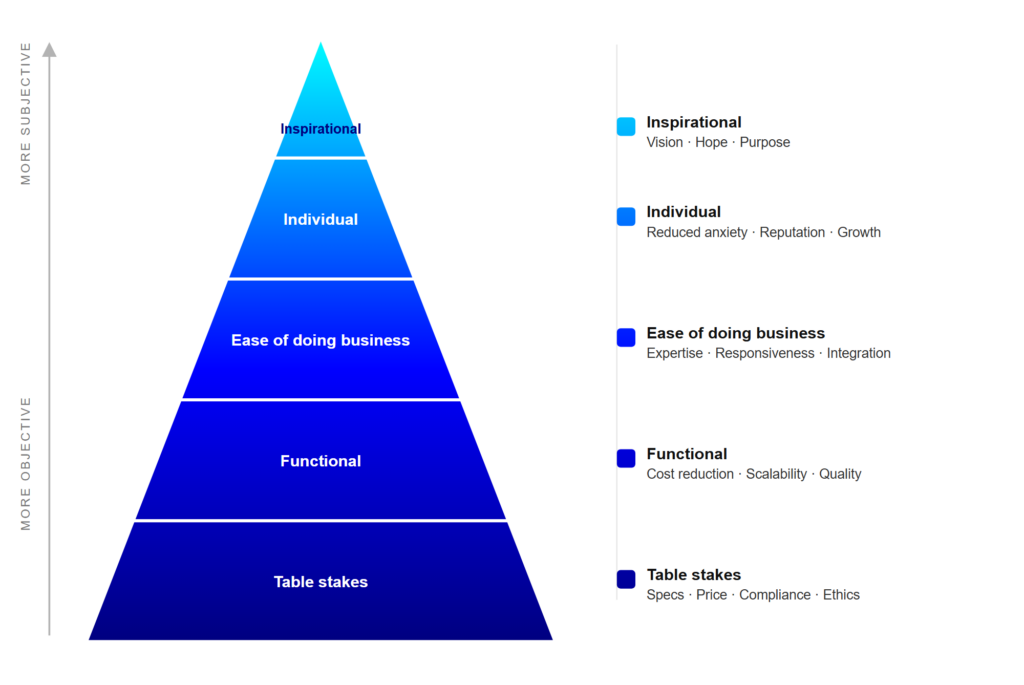
Figure 1. The B2B Elements of Value, shown as five levels from objective (base) to subjective (apex). An interpretation of the framework introduced by Almquist, Cleghorn and Sherer (Bain & Company / Harvard Business Review, 2018). Element names reference the published framework.
Their central finding has aged better than almost anything else written about B2B that decade. They surveyed 2,300 decision makers across two industries that could hardly be less alike, IT infrastructure and commercial insurance, and asked what mattered. Insurance is the tell. It is a regulated business where the buyer is handing over risk instead of just paying for a product. This is the exact shape of decision this article is about. Buyers said cost reduction. The statistics said something else. When Bain measured which elements predicted loyalty, cost reduction ranked 27th out of 36. The drivers were product quality, expertise, responsiveness. The base of the pyramid was commoditizing. Differentiation was moving up.
That was the world of tools, and the pyramid mapped it well. My argument is simple. Agentic AI does not break that map. It proves the map was prophetic. But it also does something its authors never had to reckon with. It changes what sits at the bottom of the pyramid, and what you are really buying when you reach for the top. The pyramid still stands, but it no longer stands on the same ground.
Agentic AI turns a buying decision into a hiring decision
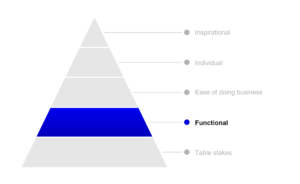
Figure 2. In focus: Functional value. Productivity and cost, the home of the ‘productivity tool’.
Here is the claim I keep returning to. Agentic AI is not a productivity tool. Agentic AI is a way to write a job description and run it in software, at a scale set by compute. Most people hear that and read marketing. I hear a category error being corrected.
So let me take it apart honestly. The claim is both more right and more wrong than it looks.
A tool makes a worker faster. An agent does the whole job
Where is it right? A productivity tool sits beside a worker and raises their output. The worker remains the unit of labor. The tool makes the worker faster and cheaper, but the human still stays the binding constraint, the thing you run out of when you try to scale output.
An agentic system is different in kind. You give it a goal, a set of tools, and a set of constraints. It directs its own work to the end. Put those three together and you have more than a job description: you have a job that runs itself. Once software can hold a job end to end, you have stopped buying a tool. You have started hiring labor. That changes what you are buying. The unit of procurement itself has changed. Procure a tool and your returns are capped by headcount. Procure the output of an agent and your capacity scales with compute. On a slide, that reads as one seductive phrase: infinitely scalable. Those are very different economics.
But autonomy moves the constraint instead of removing it
Where is it overstated? “Not a productivity tool” is a false split. Substituting labor is the ultimate productivity gain, not its opposite. And “infinitely scalable” is an aspiration dressed as a fact. The scaling is bounded. By cost, reliability, and by error that compounds across long chains of autonomous action.
There is a harder bound, and it is the one that matters. Your output now scales with compute, but so does everything that can go wrong. You have built yourself a new engine room, and you do not yet know how to oversee it. Autonomy does not delete the constraint. It moves it. The binding question stops being how many people can do this work. It becomes how much of this work can we trust a machine to do without us watching.
So the defensible version is narrower and stronger. Agentic AI turns a tooling decision into a hiring decision. It forces the operational leader to ask a question no tool ever raised: who, or what, performs this work from now on? That single move reshapes the pyramid.
When software does the job, the pyramid gets a new floor and a heavier crown
Three things happen to the Elements of Value when the software does the job, not just helps a person do it.
One: the base collapses into table stakes 2.0
First, the old bottom two layers merge. Table stakes and functional value, meeting specs, price, cost reduction, scalability, collapse into a single commoditized base. When an agent performs the work end to end, time savings and reduced effort stop being features. They become the definition of the product. Of course it saved time: it did the task. But scalability stops being a brag and is simply what software does. Call this merged base table stakes 2.0. Vendors have competed there for twenty years, and under agentic AI it commoditizes faster than ever.
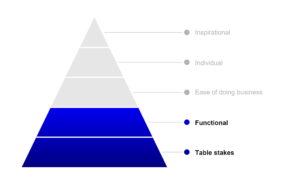
Figure 3. In focus: the base. Functional and Table-stakes value commoditize as the agent does the job.
Two: a new floor appears beneath it, the autonomy tax
Second, a new floor appears beneath even that. Table stakes 2.0 assumes the work gets done. This new layer decides whether you can let it be done at all. Passive tools never had to earn the right to act. They ran when you told them to. They stopped when you closed the laptop. A digital worker acts on its own, inside your systems, against real consequences. So a new layer of value appears, one that did not exist in the 2018 model. It includes:
- Reliability when no one is watching
- Alignment, so the agent stays on script
- Auditability, so you can answer for what it did
- Governability, so you can constrain it and halt it
- Security, because it works from the inside.
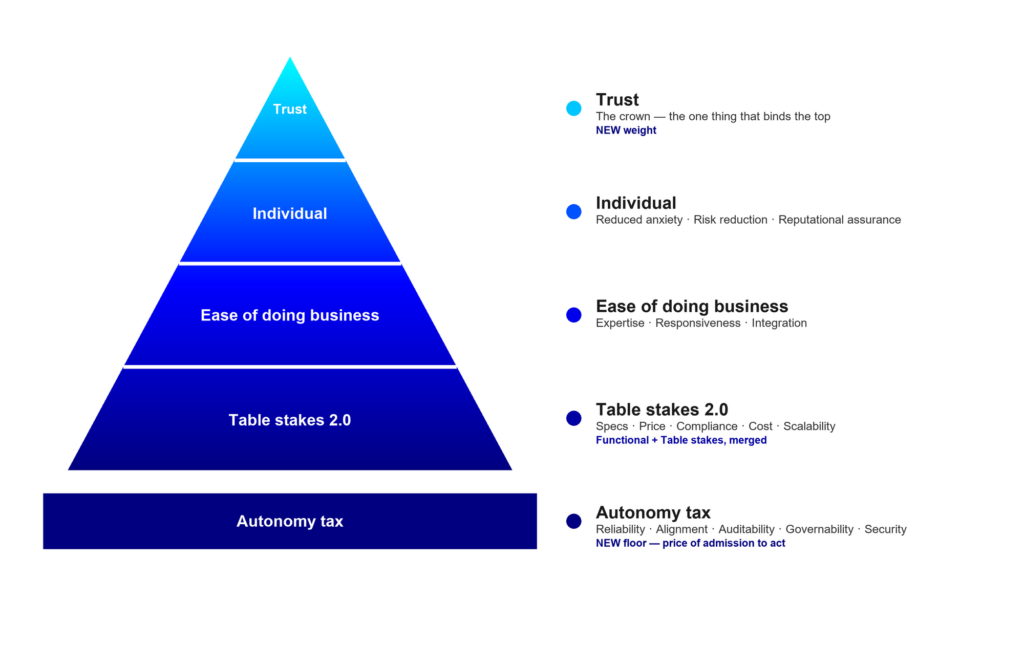
Figure 4. The B2B Elements of Value, revised for agentic AI. The 2018 functional and table-stakes layers merge into a single commoditized base (table stakes 2.0); a new floor, the autonomy tax, appears beneath it; and trust becomes the crown that binds the top. An interpretation of the framework introduced by Almquist, Cleghorn and Sherer (Bain & Company / Harvard Business Review, 2018).
Call it the autonomy tax. It is the price of admission for software that acts, not software that only runs. Below that line, no agentic offering is viable. The demo does not matter.
Three: value rises to the top, where trust lives
Third, the center of gravity moves up the pyramid. Bain predicted this. As the functional layers commoditize, the value pools higher up. It lands where the 2018 data already found loyalty. Output quality, expertise, responsiveness, integration, risk reduction, reduced anxiety.
The article flagged one more thing, almost in passing. A fear of failure nags at buyers who make decisions that affect revenue and many employees. Delegate a job, and that fear does not shrink. It grows. So reduced anxiety, risk reduction, and reputational assurance rise toward the top.
One element binds the whole upper structure. The original framework only implied it. Trust. You are hiring a worker now. You do not buy trust from a tool, you require it from a colleague.
Put the three together and the pyramid has a new silhouette. A wider, commoditized base, table stakes 2.0. A new floor bolted underneath it, the autonomy tax. And a heavier crown, trust. The same elements as 2018, standing on new ground, carrying new weights.
Everything becomes measurable except the one thing that decides: trust
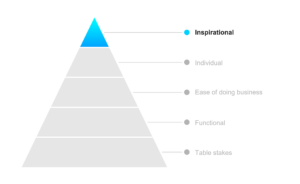
Figure 5. In focus: the apex. Where trust now binds the upper pyramid.
Agents finally make the visceral measurable
There is a useful irony in the original research. Bain had to infer the value of the emotional elements. Surveys and Net Promoter Scores were the only instruments, because anxiety and expertise are hard to measure. Agentic AI dissolves part of that problem. You can instrument an agent directly. Measure task success, error rate, and how often a human had to step in. The visceral becomes legible. That is the rigor the article asked for.
But the measurement frontier does not disappear. It relocates. It moves up to the new apex, where trust lives. That is the hardest place to put a number on. We can measure whether the agent got the answer right. We are still learning to measure whether we should let it answer unsupervised at all.
The moat sits underneath and on top, never in the middle
This is the strategic terrain for anyone building or buying here. The depth is not in the demo. The demo is table stakes, and table stakes do not win. The depth sits in two places. Underneath, in reliability, auditability, and governance. On top, in the trust an organization extends to a system acting in its name. The middle is where everyone is racing to commoditize. The moat is not there.
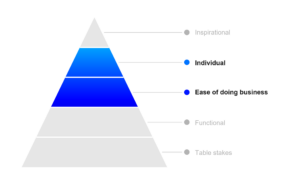
Figure 6. In focus: the middle. Ease of doing business and Individual value, where loyalty concentrates.
For buyers and builders, procurement and hiring become the same question
If you buy, you are now a hiring manager
If you sit on a buying committee, your question has changed shape. You used to ask one thing: Is this tool more productive than the one we have?
Now you ask a different questions:
- Can I describe this role precisely enough to delegate it?
- Can I trust the result without standing over it?
- Can I prove, afterward, what it did and why?
Those are workforce questions, not price questions.
If you build, compete where the value is moving
If you build these systems, the lesson is blunt. Compete where the value is moving. Output quality, expertise, and responsiveness drove loyalty in 2018. Back then they were attributes of your company. Under agentic AI they become attributes of the agent itself. Those three qualities still decide who wins the deal. Add the new floor of governance and the new ceiling of trust, and you have the whole map. The elements did not change. Their weights did.
The deeper shift: procurement and HR merge into one
The 2018 article ended on a modest promise. Managers could finally bring scientific rigor to a visceral decision. That promise is coming due faster than its authors knew, and it arrives with a larger one attached.
For a century, companies have run two separate procurement functions. HR recruits labor. Procurement buys tools. Agentic AI collapses the wall between them. When software can hold a job, the two questions become one. You stop asking “which tool do we buy” on one side and “who do we hire” on the other. You start asking a single question about every unit of work in the business: do we run this job on caffeine, or on compute? Human labor, or digital labor?
That is what the Elements of Value now measure. Not the features of a tool, but the terms on which you would take on a worker. The pyramid still stands. It has a merged base, a new floor, and a heavier crown. The crown is trust, because the moment you stop buying tools and start hiring labor, trust is the thing the entire decision hangs on.
About the author
Karli Kalpala is the Chief Strategy Officer and the Head of AI Agent Business at Digital Workforce.

Share this post